
I became a liberal when I was twelve, and still remember how and when it happened. It was 1968, and I watched through the windshield of our family’s whale of a Buick LeSabre as a young woman attending an anti-war protest in Washington, D.C., crossed the intersection where we were stopped. She wore bib overalls and no shirt, and as she stepped off the curb into the crosswalk, whomp, there it was. An actual breast, the first I ever remember seeing.
The social upheaval swirling around our car that day faded from focus as my adolescent attention narrowed to that single, unbound marvel passing before my repressed Catholic eyes. I don’t recall her face.
I was alone in the back seat, and my parents turned around to see if I had noticed. I pretended not to. But in retrospect, I’m pretty sure that was the precise moment when I decided that, like my older brother Dave, I was definitely against the Vietnam War into which our oldest brother Bill was about to plunge.
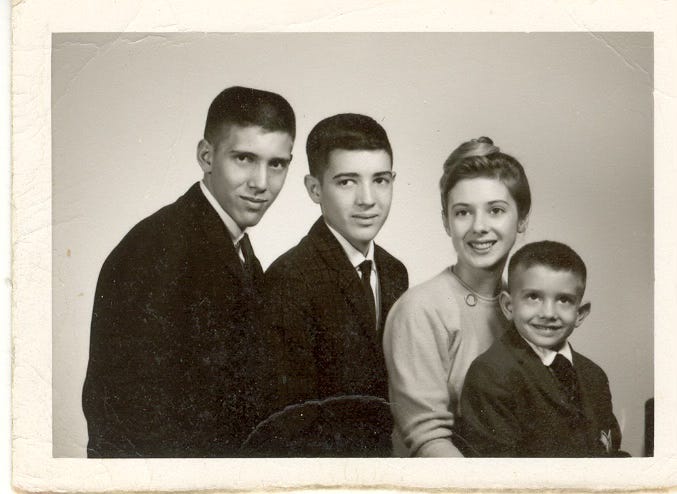
Brotherhood is a complicated bond under any circumstances. I’m the youngest of four by a decade. The others arrived in a tight cluster during and after World War II. Ten years later, I came along. (Let’s go with the term “miracle child” rather than “accident.”) To me, they were teenage aunts and uncles more than siblings, and I grew up worshiping each of them.
My sister Lisa was simply my best friend. I adored her until the day in 2015 when she died, just a month shy of seventy-three. But I had a clear choice between two potential male role models. Bill was twelve years my senior, and Dave was ten years older than me. Both seemed heroic, if in vastly in different ways.
Like today, those were divisive times. Back then, Bill was about to leave for Vietnam’s Mekong Delta. He’d enlisted in the U.S. Navy and was specially trained for its new Mobile Riverine Force, hardened, engineered, turned loose with seven other lethal children on a floating napalm cannon nicknamed Zippo 5. Officially, they were charged with defoliating the riverbanks of the Mekong River, a basic seek-and-destroy mission intended to keep the U.S. patrol and supply boats navigating South Vietnam’s vital waterways safe from shoreline attacks.
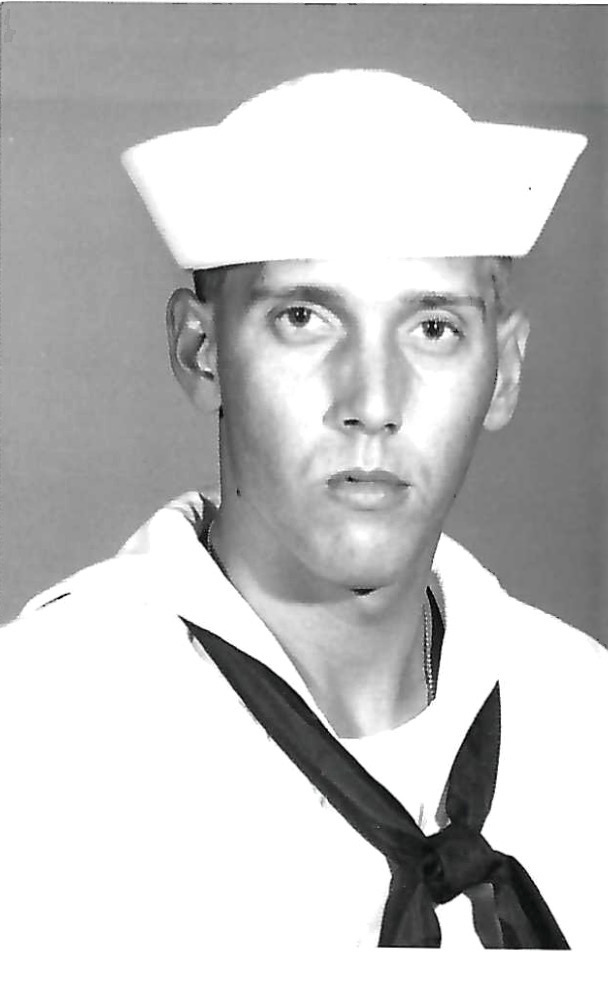
Of course, it was never that simple. Firefights were an almost daily hazard, and eventually would claim four of Bill’s original seven crewmates. Zippo 5 sometimes burned people alive. My oldest brother returned from that war with two Purple Hearts, though it would take him fifty years to start talking about those combat experiences. When he did, I listened and turned some of those stories into “27 Knots,” a novel which Open Road Media will publish this coming November. But to me back then, he was a highly decorated cipher.
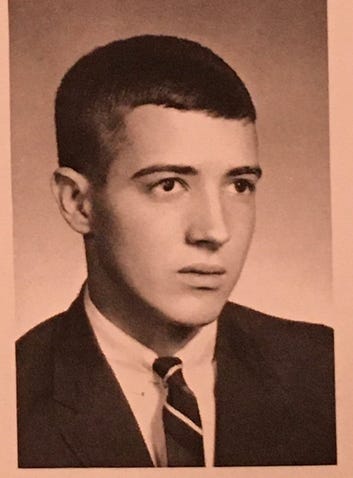
Dave, on the other hand, spent that war in the streets. A student at Jacksonville State University in Alabama, he’d embraced a role in the anti-war movement after military recruiters rejected him. They cited the total blindness in his right eye, the result of a childhood rock-throwing incident.
His hair was long, and even at twenty he rocked lush muttonchop sideburns. Dave listened to Dylan and Joan Baez, and claimed to know Baez’s then-husband, the famous activist David Harris. He organized peace and civil-rights protests on campus, and among his lefty contemporaries in that small corner of the American South brother Dave had emerged — much to our father’s chagrin — as an outspoken radical and leader among the kind of people who included young women who walked around in bib overalls with no shirt, with at least one perfectly mesmerizing breast.
For most of my life, I knew very little about what Bill did in the war. From the few pictures he shared, I knew he served on a small river patrol boat that spewed napalm from two turrets on its bow. I didn’t understand his specific role on that crew until almost a year into his tour, when our mother got sick and her doctors thought she might die. Bill was granted an emergency leave to come home to see her and arrived at the hospital in Pittsburgh wearing the same camos he’d been wearing when a helicopter plucked him from a tree in the jungle canopy.
He was dressed like that because, it turns out, my brother was a sniper.
Bill decided to rejoin Zippo 5 and its crew after his emergency leave, even though he was given the option of not returning to combat. He explained cryptically that he’d left his crewmates without a proper goodbye, and that he felt his job there was not yet finished.
Over the decades that followed, in unguarded moments, Bill let slip a few details about his life as a young American caught up in a controversial war. They were only glimpses, usually offered as part of a story to which he could affix a punchline or recast as the foibles of military life. Occasionally he’d share something more troubling, but for the most part I knew only that he’d come home alive and seemingly unaffected by what he’d seen and done, and that he seemed to shift gears smoothly into life after combat.
After his discharge, Bill married Sue, fathered two daughters, and began building a career as a financial advisor. He followed an opportunity to South Florida, and he and Sue raised my nieces in that sun-kissed land of wealth and privilege. Our politics diverged. Years passed, life happened, and my brother seldom talked about his time in what’s remembered as the “Brown Water Navy.” If you didn’t see him at his daughters’ weddings — among the few occasions when he wore his beribboned dress uniform with his medals pinned to his chest — you’d never know he was a proud American warrior who’d witnessed the worst of the tragedies and excesses of the Vietnam War.
I’m no psychologist. I won’t pretend to understand how he has managed to carry his secrets all these years. I do know this: He attends Mass daily, and often shows up early to pray the rosary. He generously contributes to strangers in need. At eighty-one, his life is focused on God, his children and grandchildren, and on trying to help others whenever he can. He is a kind and humane man who, during a brief period in his distant past, was asked to do sometimes inhumane things.
The oft-told story of the troubled Vietnam-era veteran is haunting and familiar. Many of those stories are slow-motion tragedies played out not only by the veterans themselves, but by their wives, children, extended families, and employers. But my brother Bill’s courage since the war seems every bit as impressive as his courage in combat. It’s a story of a physically and morally wounded warrior who absorbed the horrors he witnessed and carried on as best he could. He built a life and a career. Raised a family. Found space in his head for both old nightmares and the possibilities of life beyond them.
Since Bill didn’t talk much, Dave was much more accessible to me during my formative teenage years. His anti-establishment, raised-fist life seemed infinitely more interesting to a kid struggling to find his place in a world that, like now, was convulsed by political and social unrest.
According to family lore, Dave once was detained for throwing chicken manure on the steps of the U.S. Capitol, and occasionally spoke of himself as a perceived threat to America’s entrenched powers. He hung out at collective farms, worked fields in the nude, spotlighted the protestable issues of the day by sharing his opinions and his record collection.
Early on, though, there were hints of something darker that in retrospect involved clear self-absorption and paranoia. Deep into middle age, Dave remained convinced that his college-era anti-war and civil rights efforts had put him in the sights of the Federal Bureau of Investigation, and for many years believed the domestic intelligence agency kept a file on him. At one point, during a period when he was regularly drunk-dialing me late at night, I filed a Freedom of Information Act request for that supposed file to prove that he wasn’t being monitored.
Unfortunately, his name did turn up in a single, heavily redacted college campus incident report from decades earlier. That was enough to fuel his delusions.
Dave carried his radical persona like a grudge through a spotty career as a retail manager, and through a marriage that eventually unraveled due in part to his intransigence. His two children grew up mostly without him, and for decades he wore his seething contempt for his ex like a battle scar. The bitterness was, to me, inexplicable.
We all worked hard to understand Dave’s anger, and his fondness for booze and weed. Trauma? Mental illness? So far, none of us have solved that dark puzzle. I’m happy to report that he softened a bit as he got older, and seemed aware that his chosen path was perhaps not the best one.
Before all that, though, and to my adolescent mind, he was one of the cool kids. I admired his idealism and willingness to challenge authority. Plus, he pissed off my dad — which had definite appeal during my teen rebellion years. And so my position on the Vietnam War and civil rights calcified. I remain a reflexive, left-leaning Democrat to this day — even as my trust in both major political parties has eroded, even as the black-and-white certainties of the world have faded to the same gray as my hair, even after my brother Dave’s life devolved into an avalanche of prolonged bitterness, substance abuse, and self-deception.
Dave sometimes attended the every-other-year reunions of our extended family, and I never saw him drink at those, or during the sporadic visits we had. In 2018, even as his health began to fail, Bill and I were able to coerce him into traveling to Pittsburgh for our parents’ shared March 3 birthday. Dad was turning a hundred, and Mom ninety-six.
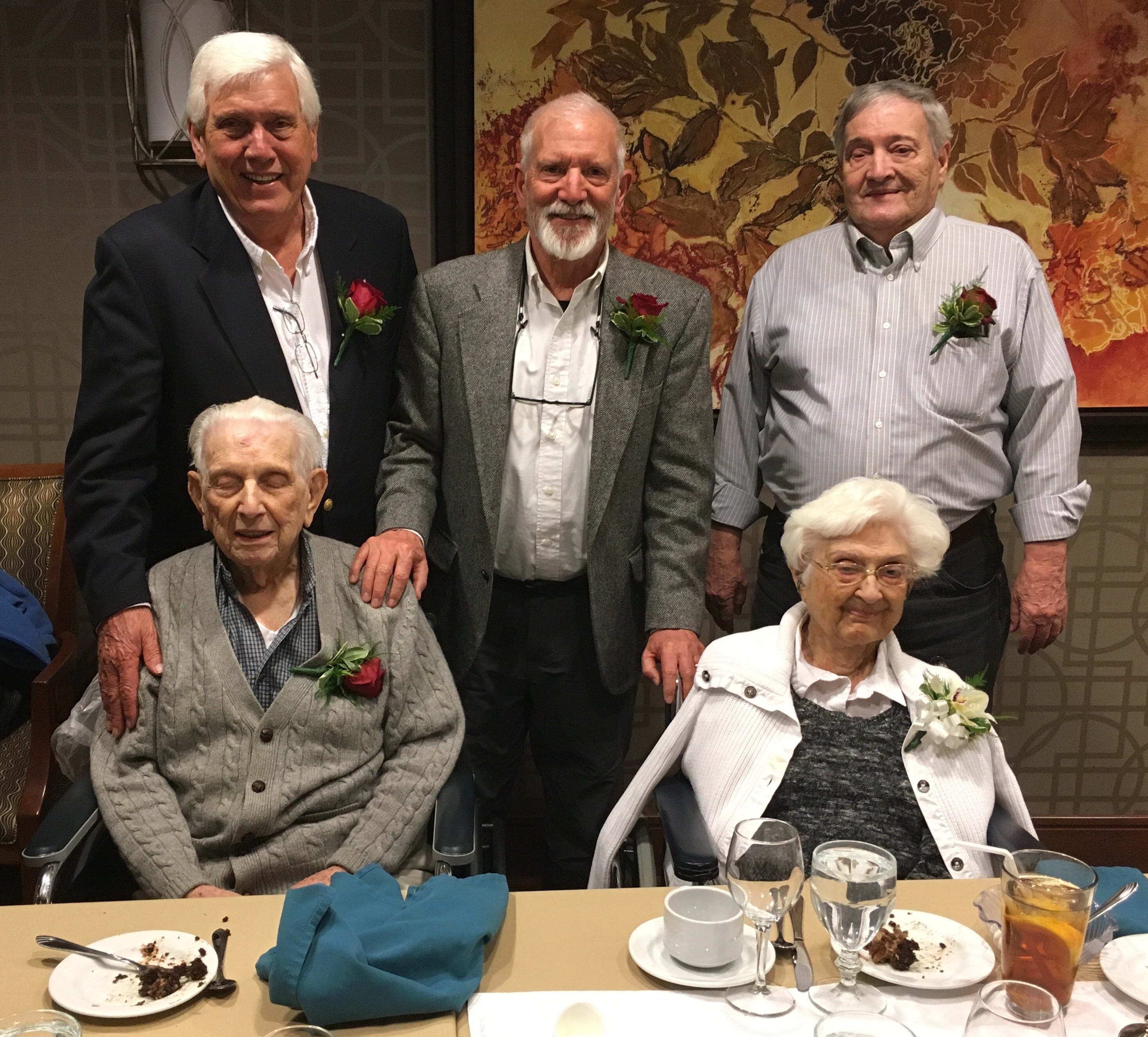
Our older sister had died by then, so their three surviving boys shared a guest room at our parents’ nursing home. As the youngest I got a hard cot between my older brothers’ double beds. Their stereo snoring sounded like I was sleeping in a sawmill, but I savored it. I suspected it would be the last time we’d ever be together, and it was.
The end came for Dave sometime around Sept. 11, 2020, in a small apartment in Panama City Beach, Fla., that I’d never had the heart to visit. Death came suddenly and naturally, probably a massive heart attack, during the Covid-19 lockdown and just a few weeks before his seventy-fourth birthday. No one is sure of the date because he was alone, the inevitable result of decisions he’d made throughout a life that, to me, seemed like an endless avalanche of pointless battles and bad choices.
Still, Dave influenced me in countless ways — everything from my taste in music, to my cynicism about American military interventions, to my commitment to social justice and the environment. I wore sideburns for a while in college, and like Dave’s hero David Harris channeled my impulse to make a positive difference in the world into journalism. But I also made specific choices along the way precisely to avoid the calamities I’d witnessed in his life.
And at some point, I began to model my life after my brother Bill’s.
Like him, I focused on raising my family and being a decent human. I veered from the course Dave charted, recognizing its essential sadness and the often distressing consequences of a life lived in constant rebellion. I worked hard at jobs I thought mattered, and found less abstract ways to change the world than pursuing “peace” and “justice.” As a younger man I volunteered for Big Brothers Big Sisters of America, and at age sixty-two began building Habitat for Humanity houses where I live in rural Colorado. I can see the future improve for those families, and for me that’s enough.
Still, I crank up Dylan from time to time and remember the choice I faced when I was twelve, when raging hormones and a passing miracle in bib overalls combined to influence the role model I chose at the time. I still admire the idealist and social-justice warrior my brother Dave was back when his complicated future was unrealized and unimaginable, but I also admire the quiet courage my brother Bill has modeled for me in the decades since.
At this point I know it’s possible to love two very different men equally. And while I can’t say if I’ve succeeded, I’ve had the privilege of trying to be the best of each.
Journalist Martin J. Smith is the author of five novels and five nonfiction books. Open Road Media will publish his sixth novel, “27 Knots,” inspired by his brother Bill’s experiences as a Navy sniper in Vietnam’s Mekong Delta, in November 2026.
A beautiful tribute to both brothers, and to the complexity of mental and moral health. Thank you, Marty!
Beautiful, thank you for sharing.